FROM ILLEGAL HARVEST TO ECOTOURISM
The Red-footed falcon is protected species in both the EU and in Angola. Although their remarkable migratory journey is supported by international conventions, enforcing these conservation measures on the ground remains a challenge.
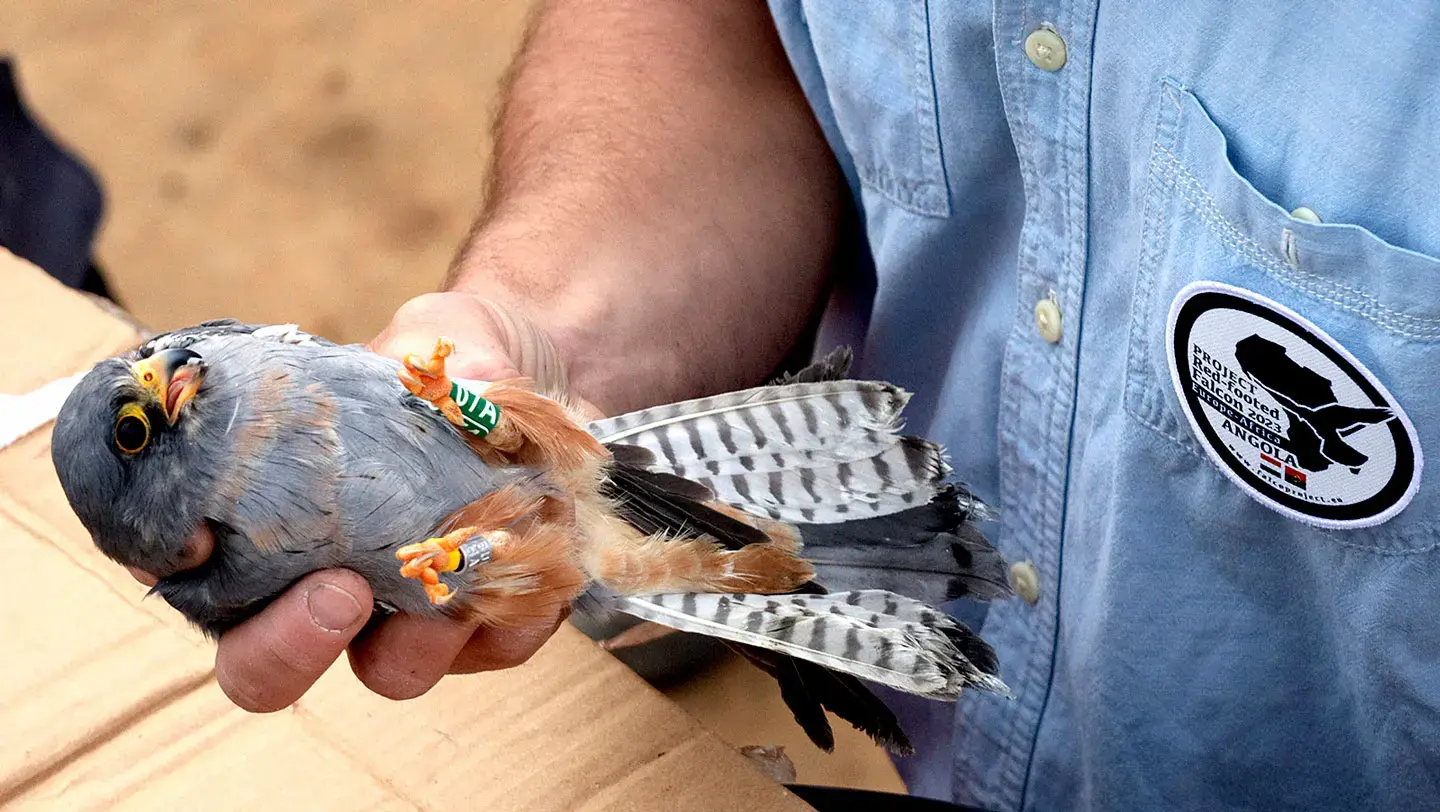
In parts of Angola, the Red-footed falcon is considered a delicacy and source of proteins by local communities.
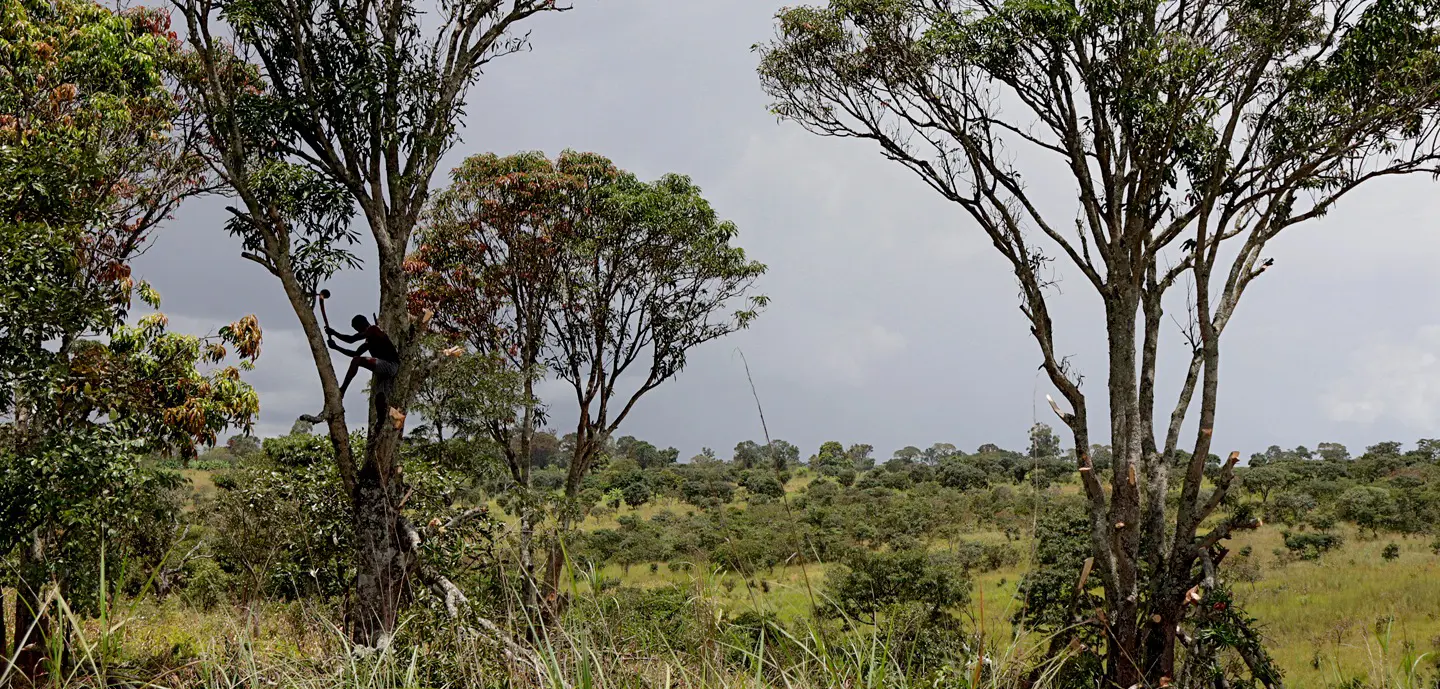
Roosting falcons are particularly vulnerable on rainy nights, when flashed with lights, they fall to the ground with wet wings, where they are easily collected in the morning.
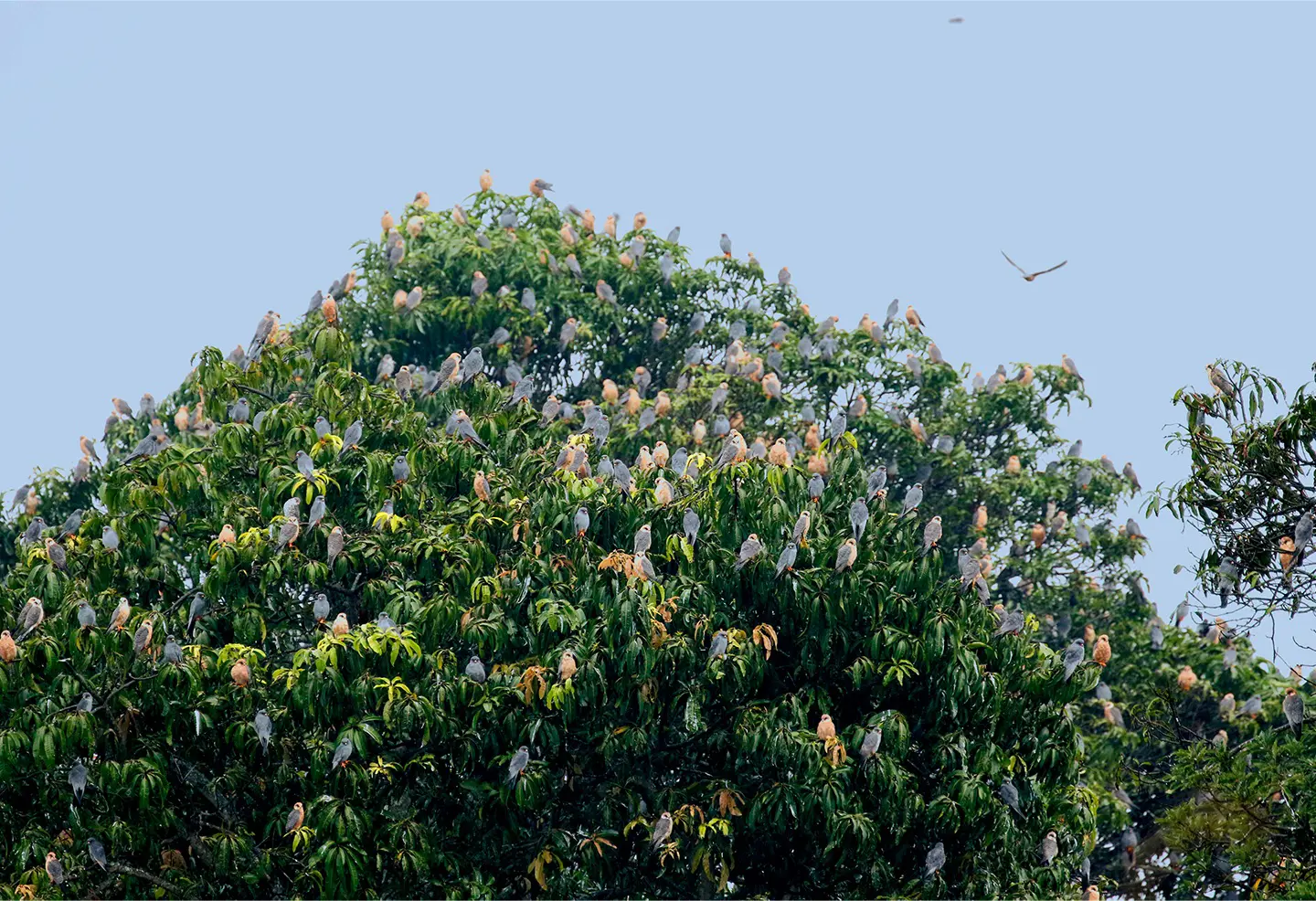
Since 2019, municipal and provincial leaders and conservation authorities have recognized the severity of this issue. The challenge, however, runs deeper.
Decades of the civil war in the latter half of the 20th century, left the landscape littered with landmines. This not only reduced livestock numbers but also devastated terrestrial wildlife, cutting off major sources of protein for local communities. As a result, people turned to alternative protein sources, including birds. This shift placed additional pressure on bird populations in the area, such as the Red-footed Falcon.
But by working together, we can turn the tide!
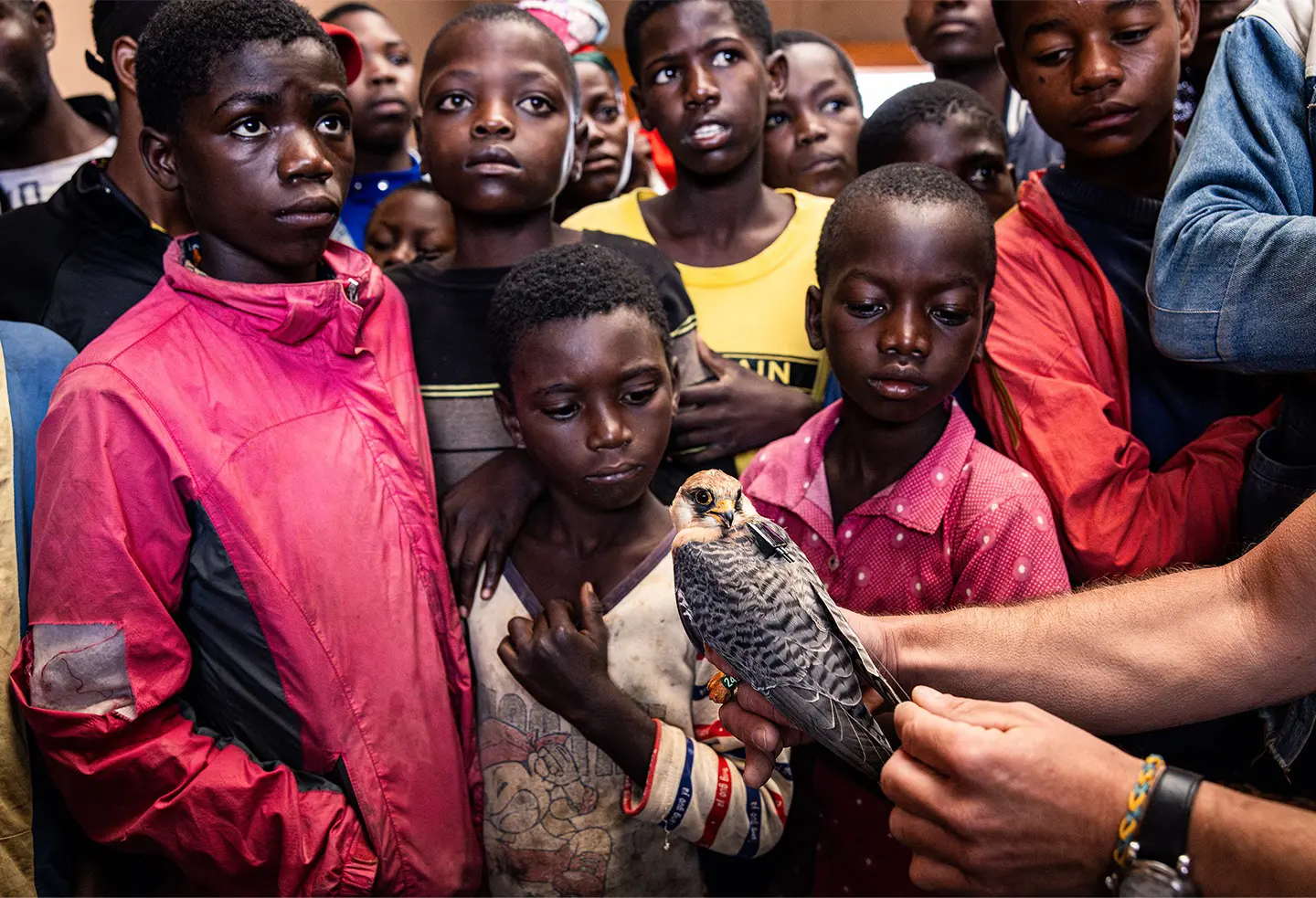
Protecting the species and its habitat depends on deepening understanding of the falcon’s ecological role within local communities and supporting community-based conservation programs. Initiatives such as ecotourism can help create lasting, sustainable benefits, ensuring a healthier future for both people and nature.
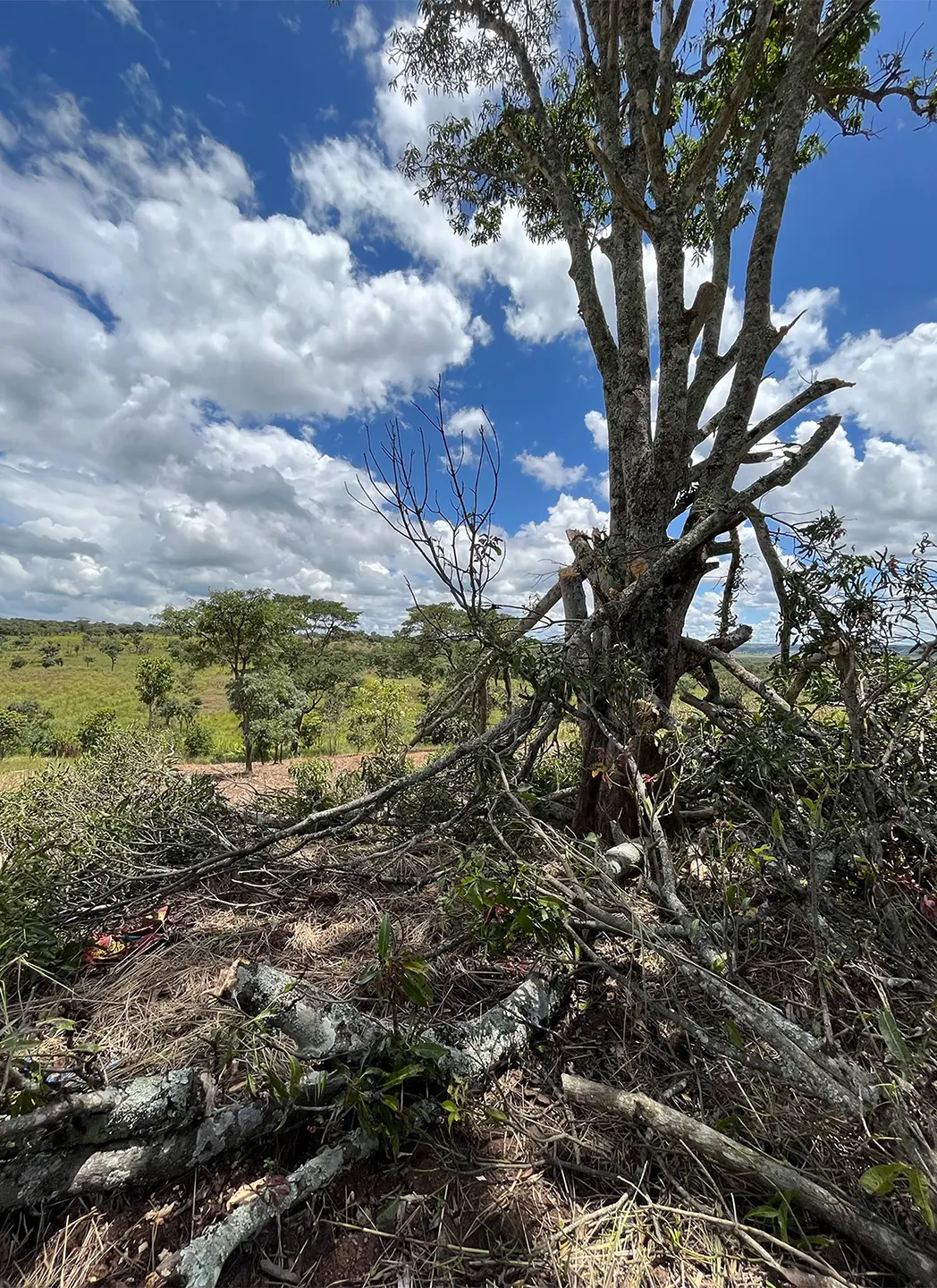
There is an urgent need to establish a COMMUNITY-BASED CONSERVATION program.